The Bantry: A monolithic coastal cocoon clad in plants
The neighbourhood was duly worried.
A five-storey monolithic concrete residence – being built into a cliff face overlooking Pittwater at Palm Beach, on Sydney’s Northern Beaches – can do that. It looms large to the naked eye.
Both client and architect wanted the house, known as The Bantry, to have a sense of intimacy and were set on “absorbing” the grand new multistorey build into greenery.
Local councils also strongly advocate for large houses to blend into their surroundings and often require architects to engage a landscape architect or designer.
Enter Myles Baldwin Design.
The high-profile landscape designer was brought on board by architects Cottee Parker to work on the project “from the ground up”.
“Initially, people in the suburb were a little shocked as the scaffolding went up and the walls were being built,” recalls creative director Myles Baldwin.
“If you’re going to build a five-storey Mediterranean-inspired house on the edge of Pittwater, people get a bit nervous. It’s our job to figure out how it will fit into the site and blend with the existing landscape.”

Baldwin – with his design team, project landscape architect Ryan Morton and principal landscape architect Sunnie D’Elton-Howard – came up with a plan to drape the house in a tapestry of “greenness”.
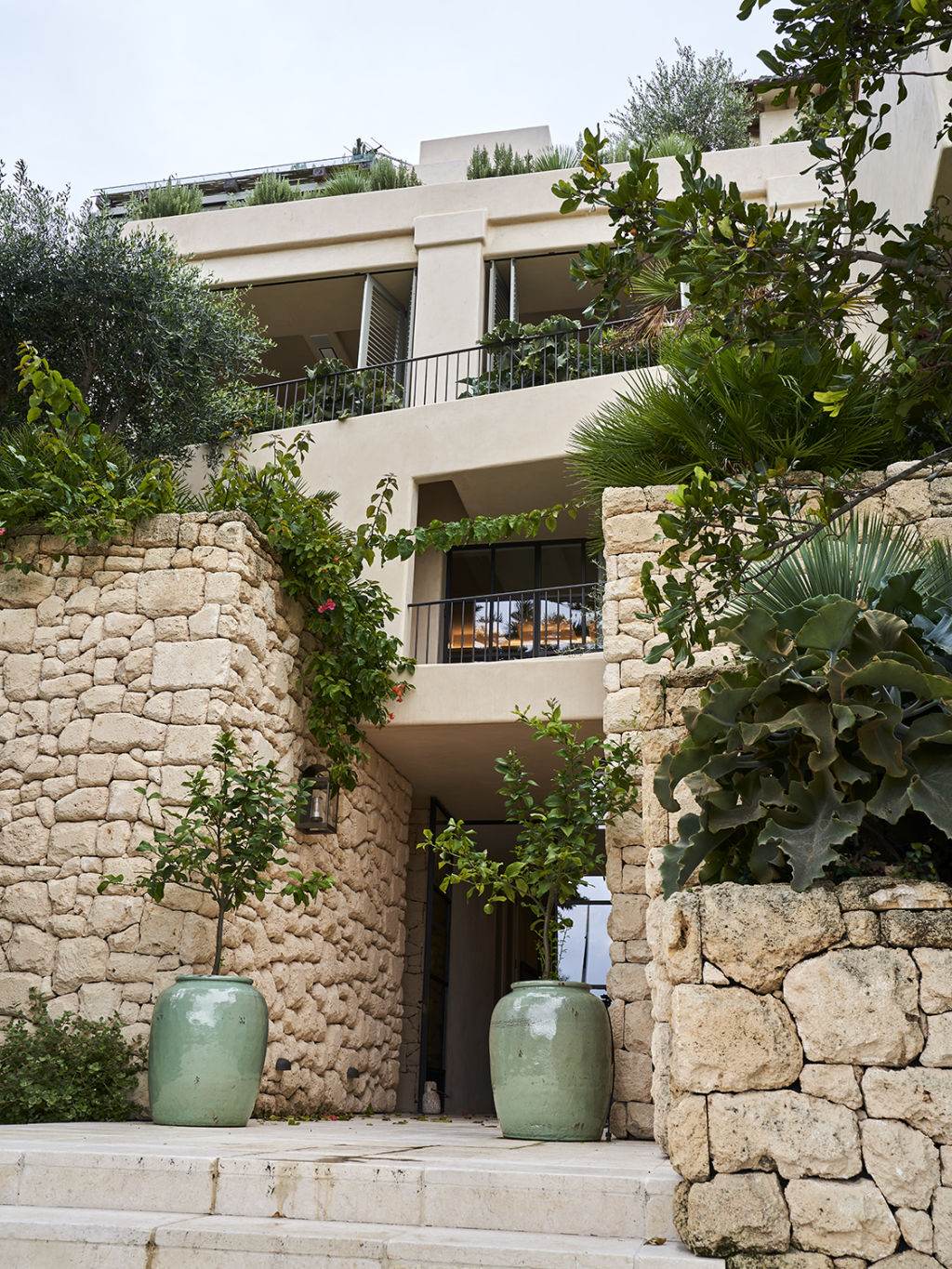
This meant mature trees, set back from the boundaries, rising above the building and built-in planter boxes on each of the five levels – spanning from one side of the house to the other – filled with perennials, shrubs and climbers.
“It was all about the house absorbing the greenery,” says Baldwin.
Baldwin explains mature trees are good at establishing an immediate presence, so the garden appears like it’s been there for 15 years, rather than 15 minutes, while “helping the house absorb the landscape”.
But it also requires a lot of planning and preparation – not to mention experience working with them.
It’s necessary, for instance, to build good soil profiles and drainage.
Giant perforations were dug to make way for 21 mature native and exotic trees, some of which were up to 10 metres high and weighed between three and four tonnes.
These included tuckeroos, a native rainforest tree, and cabbage-tree palms, which were craned into place over four days.
“People stared in amazement at these giant holes, a metre and a half, dug out everywhere around the architecture,” Baldwin says. “It looked very unusual.”
The other main landscape component was the planter boxes, located on each level, which Baldwin filled with a seasonal patchwork of trees, shrubs, perennials, and climbers.
These gave all floors their own intimate garden, which also formed part of the view across Pittwater.
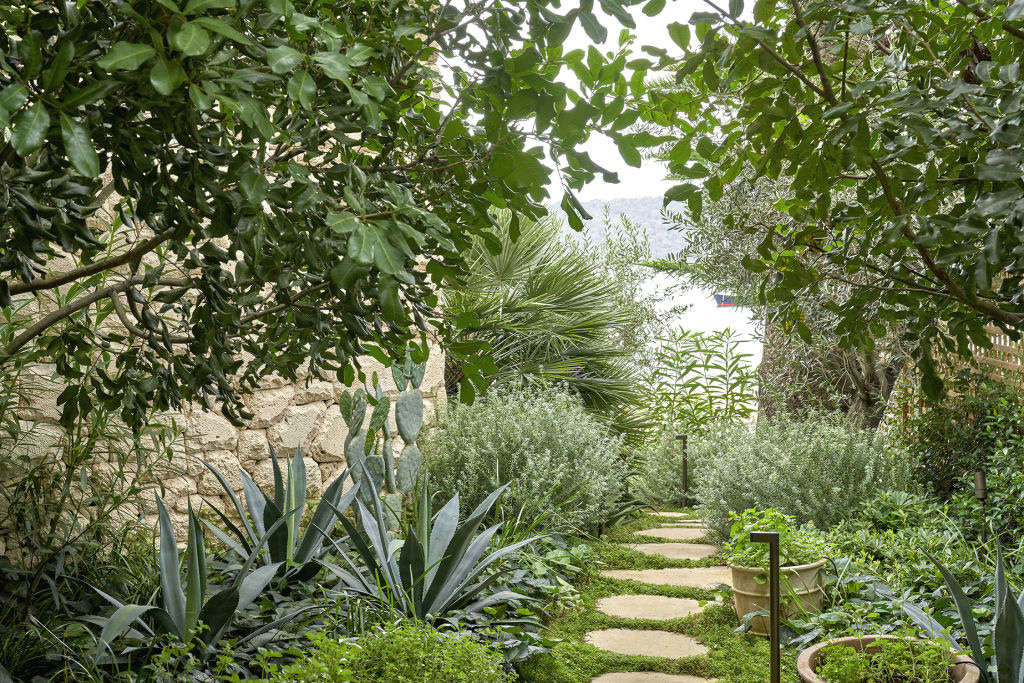
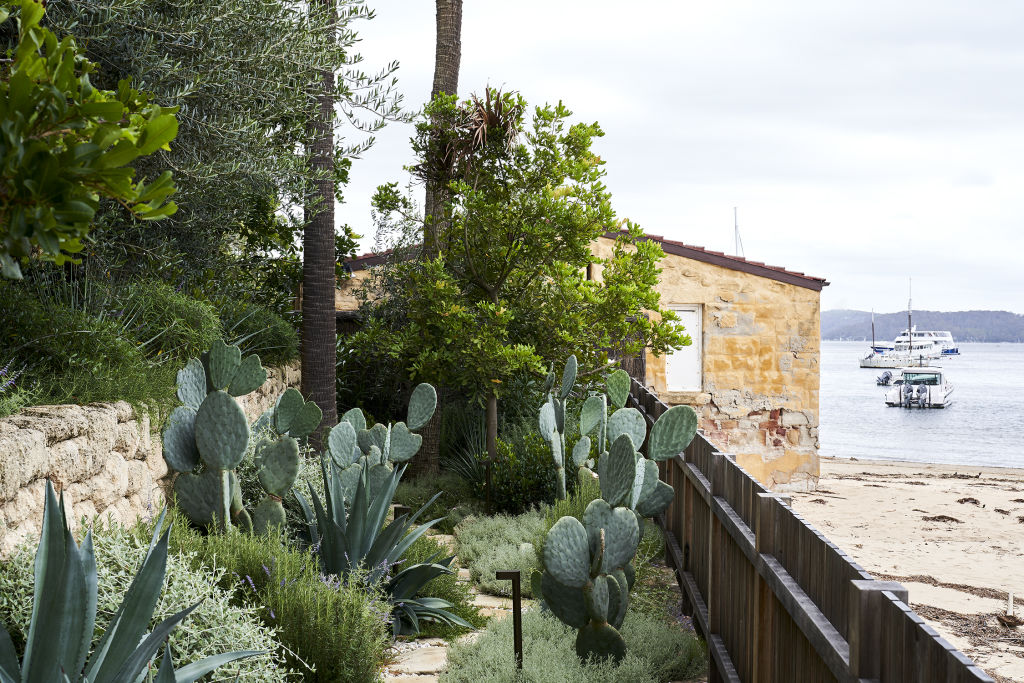
Among some 18 perennials were Elephant’s ear kalanchoe, Century Plant, San Pedro cactus, spineless prickly pear and beaked yucca, as well as cotton lavender, shrubby germander and sand sage.
Trees included fan palms and bay trees, as well as such shrubs as viburnum, apricot, white oleander, and Indian hawthorne.
Baldwin’s palette was mindful of including “bulletproof” natives, such as coastal rosemary and banksia, knobby club rush, pig face and white kunzea – but also some indigenous to the Pittwater area, like water gum and creeping boobialla.
He also included a mix of plants growing up and cascading down the facade, such as bougainvillea and Japanese jasmine, to create a tapestry feel.
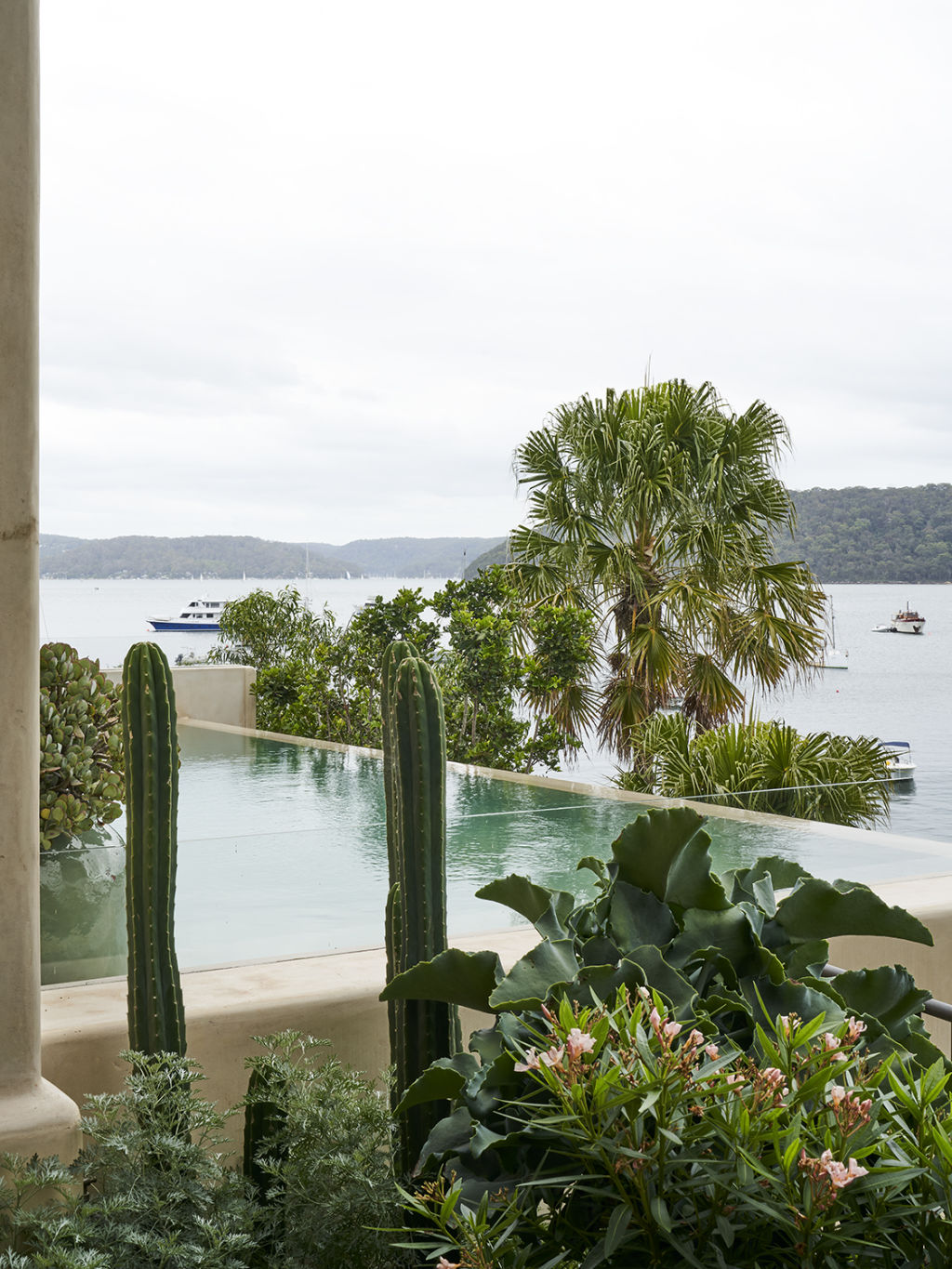
The pool on the main living level presented a particular challenge, as it prominently cantilevered into the middle of the development.
“It was a lot of concrete,” recalls Baldwin. “We needed to get planter zones big enough in front to support the growth coming up.”
It was also necessary to reprise the palette of plants across the levels.
“You need some repetition,” says Baldwin. “It gives the garden strength even though you are constantly introducing new plants.”
A massive number of pots – big, small and some with a touch of Morocco – were scattered throughout.
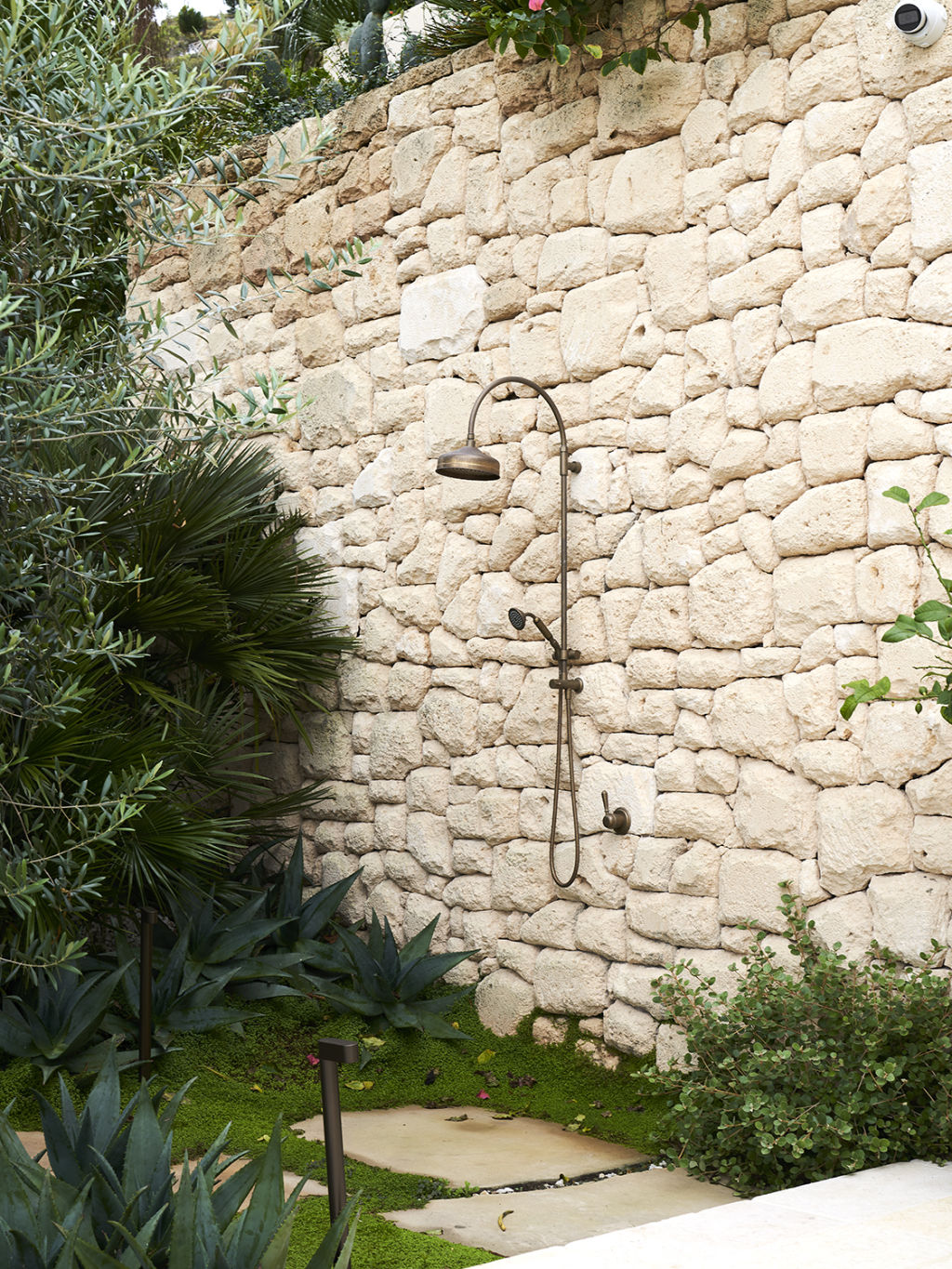
On the main living floor terrace, for instance, were several olive trees in custom-made pots. Plants decorated the lanai, an indoor-outdoor room overlooking the pool, including European fan palms and bougainvillea.
“We saw our plants as the artwork or sculptures,” says Baldwin.
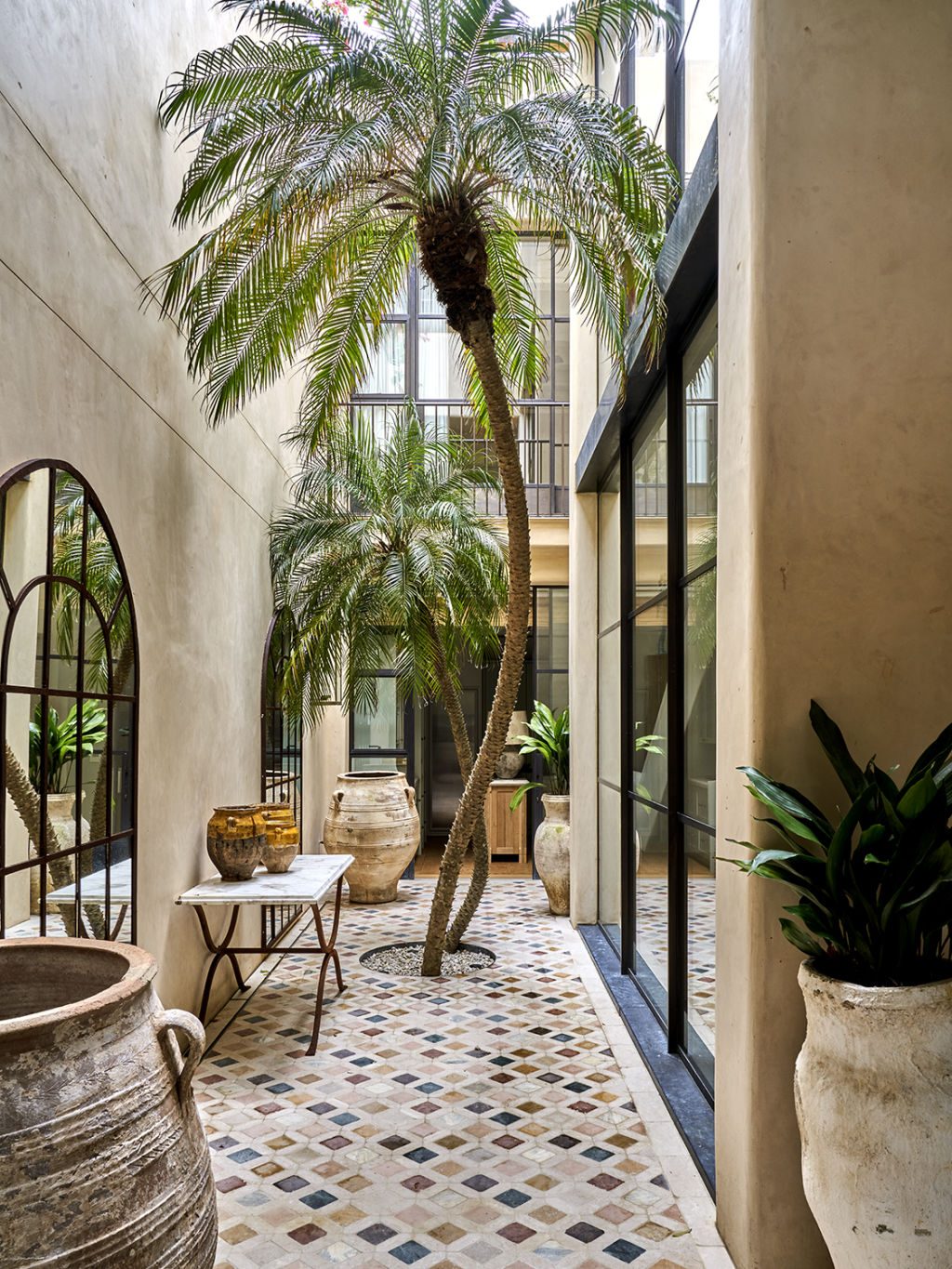
Indoors, the two dwarf date palms, rising more than three-and-a-half and four-and-a-half metres respectively, were the most eye-catching features, situated in the three-level internal courtyard conceived by interior designers Studio Snoop.
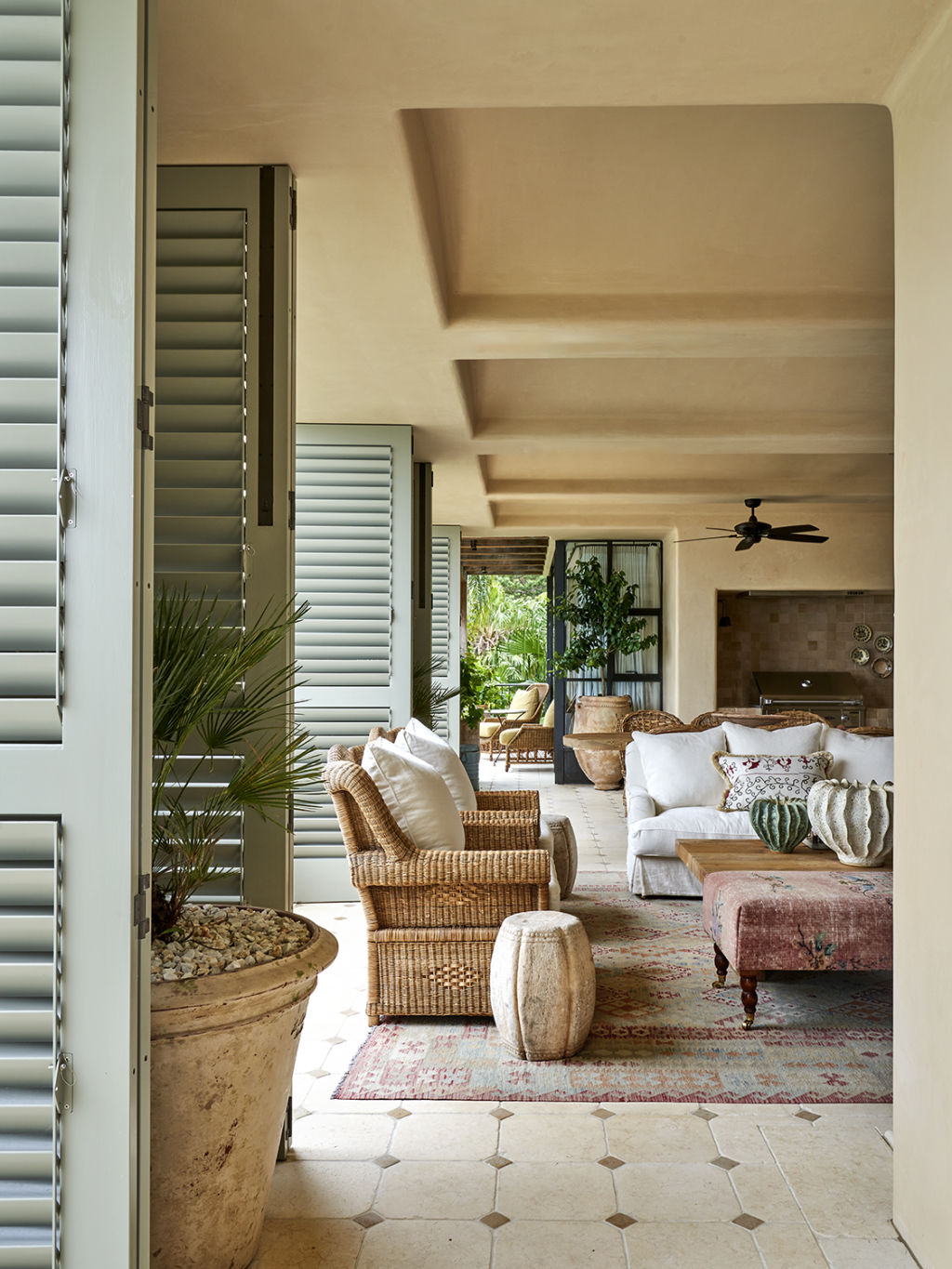
“They were probably the two most difficult trees I’ve ever installed for a job in my life,” says Baldwin. “We arranged them as we imagined them on a beach, where one grows away from the other.”
The Myles Baldwin team added some hard landscaping, they using recycled cobbles for the driveway and vehicle turntable, which resulted in what appeared at street level as a modest single-storey dwelling with an entry loggia and courtyard.
They also created sparrow-pecked limestone-clad walls, hand-chiselled for a softer textural finish, which stepped down to the ground-level garden and limestone path to the beach.
“We worked on a stone element, a plinth for the architecture, to help the house come back into the landscape,” says Baldwin.
We recommend


We thought you might like

States
Capital Cities
Capital Cities - Rentals
Popular Areas
Allhomes
More
- © 2026, CoStar Group Inc.
