How Indigenous advisors are reframing urban design
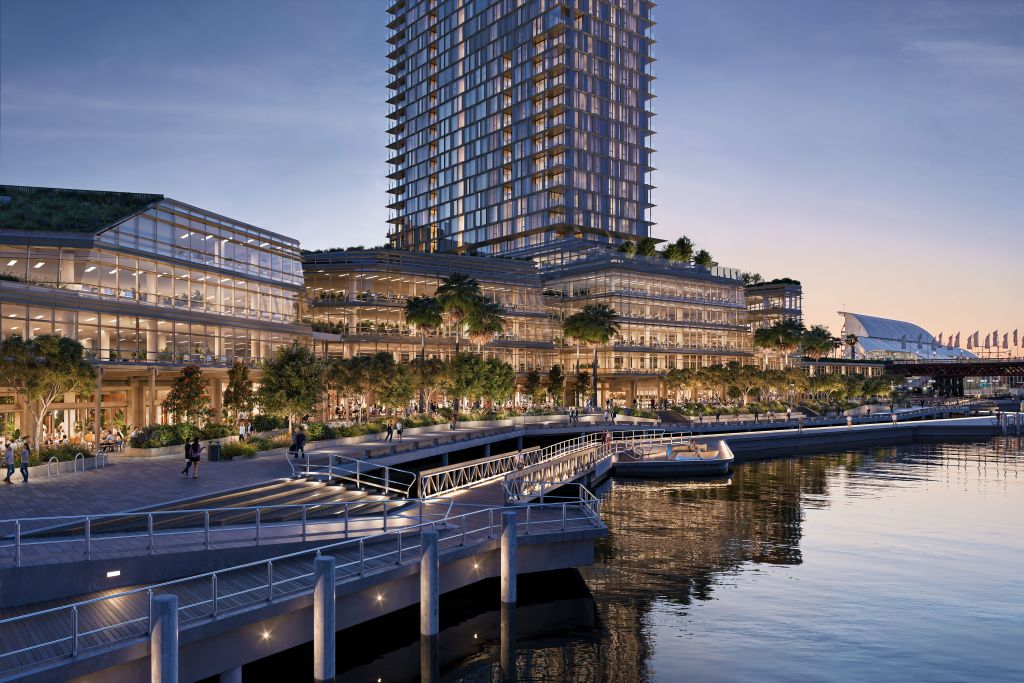
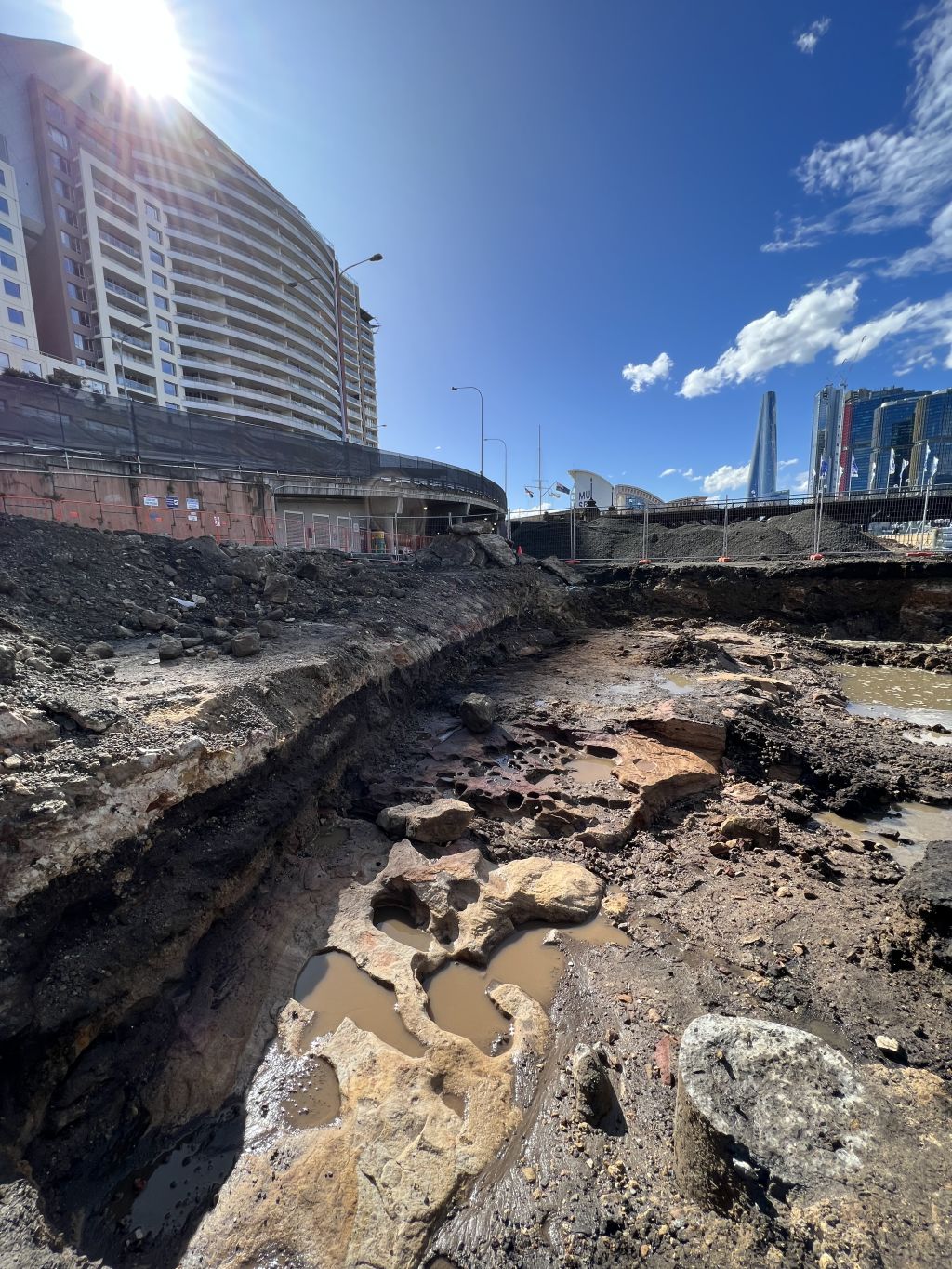
When demolition crews moved into Darling Drive, Sydney, to make way for a 48-storey luxury apartment building, they uncovered layers of the site’s long history.
Developer Mirvac had already been in consultation with Indigenous cultural advisors to sensitively approach the $1.2 billion redevelopment of Harbourside Residences at Darling Harbour.
What they discovered on site matched with historical accounts passed down through generations of First Nations people who called the area Tumbalong, which translates to “a place where seafood is found”.
“As we started to move the machinery away and started to do some more detailed investigation … there were rock pools that actually had the shells, which basically supported the stories that were being told about this being a meeting place and a place where seafood was found,” says Andrew Tobin, developer director at Mirvac.
“So we’ve got these really incredible photos and have these really special moments with our cultural advisors on being able to substantiate those stories that have been told for thousands of years.”
Partnerships between developers and cultural custodians are now common practice in architecture, interior design, landscaping and construction. Indigenous elders, historians and local artists are contributing to projects from inception to completion to ensure a connection to country is being baked into the end result.
An understanding of a place’s history gives a new building a deep sense of authenticity, says Jefa Greenaway, Indigenous architect and director of Greenaway Architects.
“The simple way I frame it is, it’s part of our shared heritage,” he explains. “It’s something that we can celebrate and amplify through the built environment, and it enables us to focus on a country-centric approach to design.
“And it enables us to tell our own stories. So rather than necessarily importing architectural styles or language from other places, we can start to build our own language. And there’s a lot of wisdom in 67,000 years of continuous connection to this place.”
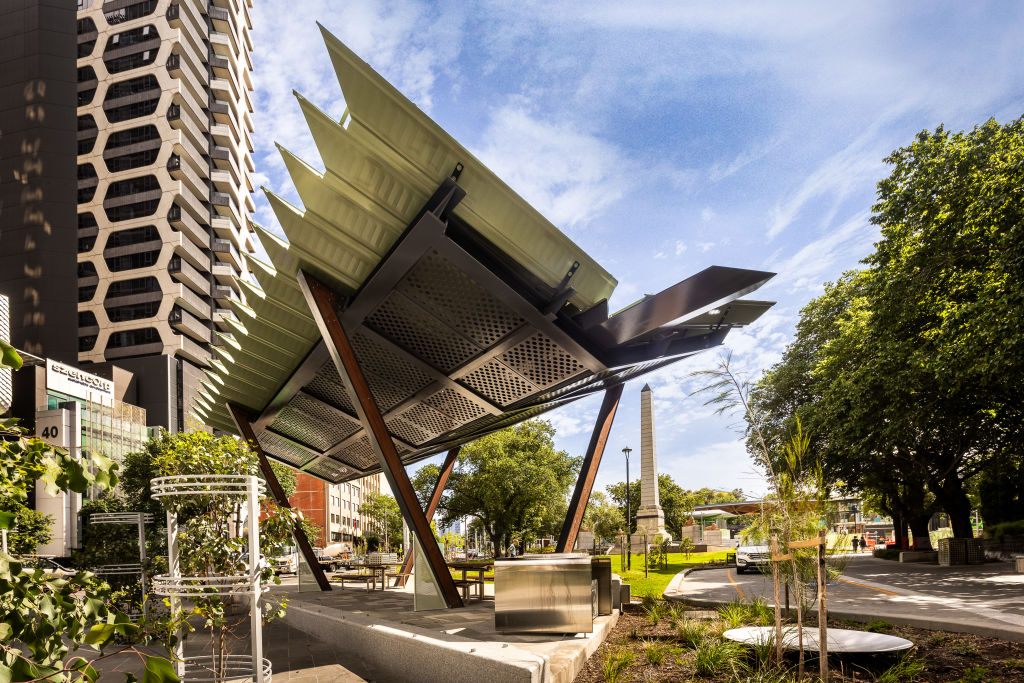
Greenaway and his team took inspiration from the fine fronds of a She-Oak tree to design a pavilion for the new Melbourne Metro. She-oaks were common in the area, particularly before colonisation, and were used by First Nations people for medicinal purposes.
Engaging indigenous consultants has become so commonplace in the building and design industry that Greenaway says there’s a shortage problem.
“The biggest challenge really for the industry is, engaging with traditional owners, elders and knowledge keepers is often hard just by virtue of the fact that they’re under a huge amount of pressure and cultural load because they’re being pushed and pulled in a hundred different directions, and everyone wants to engage with them,” he says.
The emphasis on connecting urban design with Country coincides with a widespread push for sustainable development. For generations, First Nations communities have worked in harmony with the natural environment to care for Country – lessons designers are now trying to incorporate in everything from the positioning of a building on a site to the flow of natural air throughout it.
“It’s actually embedding sustainability principles as part of our design, and that’s certainly something that all practitioners need to engage with,” Greenaway says.
“Using our resources wisely, trying to have a smaller carbon footprint, ensuring that we’re providing places which actually manage some of the challenges of climate change, like heat island effect and canopy cover.”
We recommend


We thought you might like
States
Capital Cities
Capital Cities - Rentals
Popular Areas
Allhomes
More
- © 2025, CoStar Group Inc.
