Sydney and Melbourne house values dip on rate fears
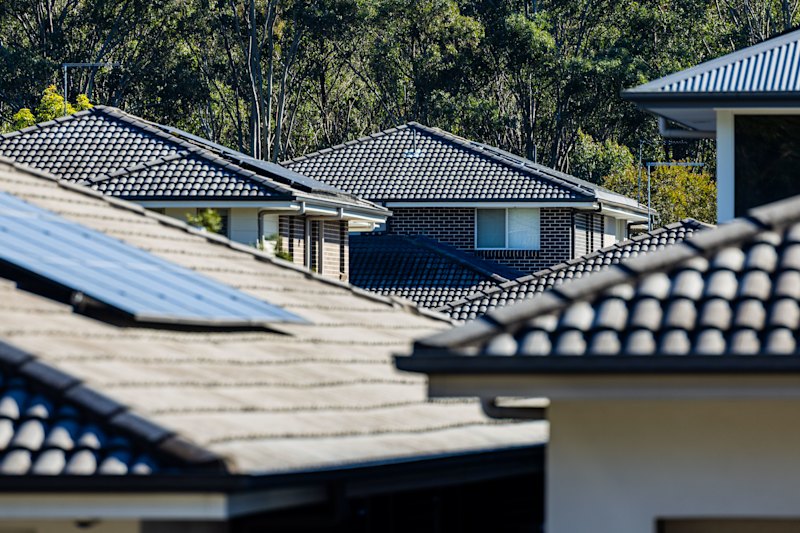
House values in Sydney and Melbourne fell in December amid signs the combination of increasingly unaffordable homes and the prospect of a new year interest rate rise have hit the nation’s two largest property markets.
Figures compiled by property data firm Cotality show house values fell by 0.3 per cent in Sydney and 0.1 per cent in Melbourne last month. It was the first time since January last year that value in the two cities had fallen.
Sydney’s median house value, despite last month’s easing, still stands at almost $1.6 million while in Melbourne the figure is $981,165.
While the two largest markets eased, values lifted in every other capital, led by a 2.1 per cent jump in Darwin, where the median house value is now $697,251. Values lifted by 1.9 per cent in Perth (to $983,068) and Adelaide ($960,051) while there was a 1.5 per cent increase in Brisbane ($1,131,329).
Cotality research director Tim Lawless said it appeared home values were likely to show modest but uneven growth in 2026, much hinging on the supply of new properties and the actions of the Reserve Bank.
“Renewed speculation that the rate-cutting cycle is over and the next move from the RBA could be a hike has dented housing confidence,” he said.
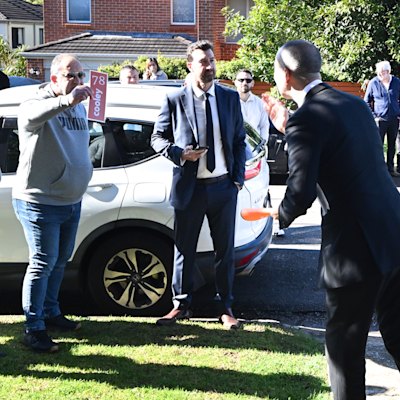
“A ‘higher for longer’ setting on interest rates, alongside a resurgence in cost-of-living pressures and worsening affordability pressures, looks to have taken some heat out of the market.”
The figures cast doubt on claims made by some property experts and the Coalition that the government’s 5 per cent home deposit scheme – which was widened to all first-time buyers from October 1 – has driven up prices.
Since the expanded scheme started, home value growth has eased in most markets.
Over last year, house values grew fastest in Darwin, at 19.9 per cent, while units in the city lifted by 17 per cent. Brisbane (14 per cent) and Perth (15.7 per cent) both experienced double-digit growth in house values.
Sydney’s house values lifted by 6.9 per cent last year, while Melbourne recorded the national low, at 5.4 per cent.
For 2025, Cotality’s measure of national median dwelling value grew by 8.6 per cent or $71,400.
It was the strongest calendar year since 2021, when values jumped by 24.5 per cent, which was the biggest annual increase in a generation.
In the nation’s capitals, particular suburbs outperformed.
The largest single increase in the country was in the Darwin area of Palmerston, where values jumped by 26.3 per cent.
Other large increases were recorded in the Perth inner-east suburban area covering Belmont and Victoria Park (up by 20 per cent); the southern Brisbane suburbs of Springwood and Kingston (19.5 per cent); and the south-east Melbourne suburb of Frankston (14.3 per cent).
The smallest increases were recorded in suburban Canberra, where an apartment building boom has lifted local supply.
Regional parts of Australia continued to record sharper value increases. The largest was in Albany, in south-west Western Australia, where values lifted by 23.7 per cent to $741,348.
In the north-west Victorian border city of Mildura, values lifted by 19.2 per cent, while across Queensland’s Granite Belt values grew by 20.4 per cent.
While values continue to rise, there are some signs of relief for the nation’s property market. Cotality noted that the rental vacancy rate increased marginally to 1.6 per cent, although it remained where it was at the start of 2025.
Cotality’s measure of rents increased by 0.3 per cent last month after rising by 0.5 per cent in November. Darwin recorded the largest annual increase in rents on houses, at 7.6 per cent, while, for units, rents climbed fastest in Hobart, at 9.3 per cent.
The smallest increases were in the two cities with the largest rise in supply during the year. Rents lifted by 2.9 per cent in Melbourne while they were up 3 per cent in Canberra.
Lawless, the Cotality research director, cautioned that rents, which have been one of the driving forces of Australia’s inflation rate over the past four years, would continue to climb.
“We will get a better feel for rental conditions in February. However, even if conditions have loosened a little, it’s from an extremely tight position, and rents are likely to rise further through 2026,” he said.
December’s monthly inflation figures to be released next week will give some insight into whether price pressures are continuing to build in a development that could result in the Reserve Bank lifting official interest rates at its first meeting for the year, in early February.
Financial markets put the chance of a rate rise next month at 30 per cent but fully expect the RBA to have taken the cash rate to 3.85 per cent by August.
We recommend




We thought you might like

States
Capital Cities
Capital Cities - Rentals
Popular Areas
Allhomes
More
- © 2026, CoStar Group Inc.
